
Who’s using Lotus AI: lessons from six months of data
Our early users had more chronic conditions and more fragmented care than we expected. Here’s how those findings are shaping Lotus.
We built Lotus as a healthcare platform that enables AIs to reason over user health data with physicians in the loop for care decisions. When we launched the product, we expected to see users who are younger, healthier adults seeking convenience. Six months of enrollment data told a different story. Our users were older and had a high fraction of users with chronic conditions, including disorders like Irritable Bowel Syndrome (IBS) and fibromyalgia. In the year prior to joining Lotus, these users had very fragmented care, meaning their healthcare was scattered among many different providers. What we found changed our priorities for product safety and care design.
The accompanying research paper, Enrollees and Early Lessons from an Agentic Healthcare Platform with Physicians in the Loop, is available as a preprint on medRxiv.
How Lotus works
Lotus AI is an agentic healthcare platform with physicians in the loop. The patient-facing Lotus agent is an LLM with tools and user-customized context that converses directly with users around the clock. At enrollment, patients consent to retrieval of their health records; the agent then reasons over the linked record, synced wearable data, chat history, Lotus care history, and a curated knowledge base of clinical guidelines and literature. An escalation algorithm determines which user requests require physician review. Escalations route to Cortex, a clinical decision support agent used by Lotus physicians with access to the same patient records. Cortex may suggest the best action but physician approval is always required. We collected user data over a six-month period in 2026, during which Lotus was free for all users.
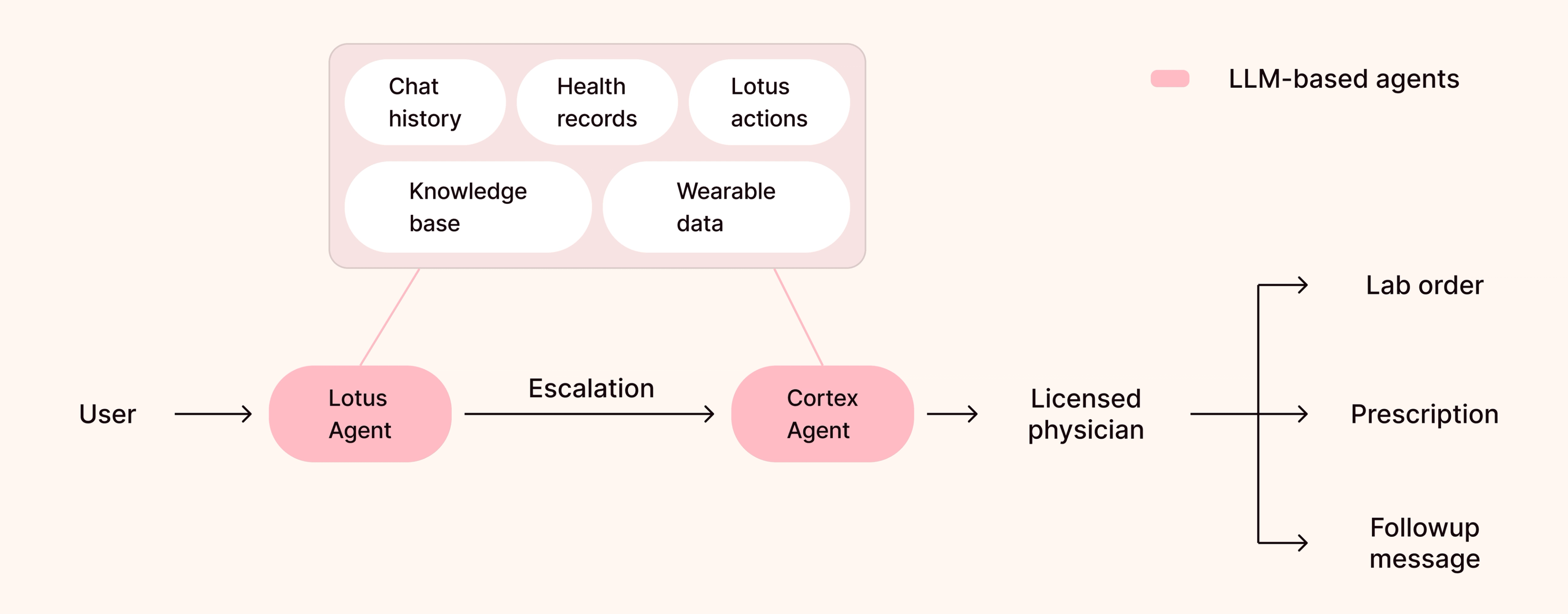
How Lotus works — patient agent, escalation algorithm, Cortex, and physician review.
Lotus users have high chronic disease burden
The first finding that surprised us was that Lotus users tend to have multiple chronic conditions. We quantified this by breaking down the fraction of users with chronic disease by age bins. The median Lotus user was 51 years old. Compared to a national baseline, Lotus users had a higher chronic disease burden in every age bin. Lotus users in the youngest age bin actually have the biggest gap, 7 percentage points, above the national average.
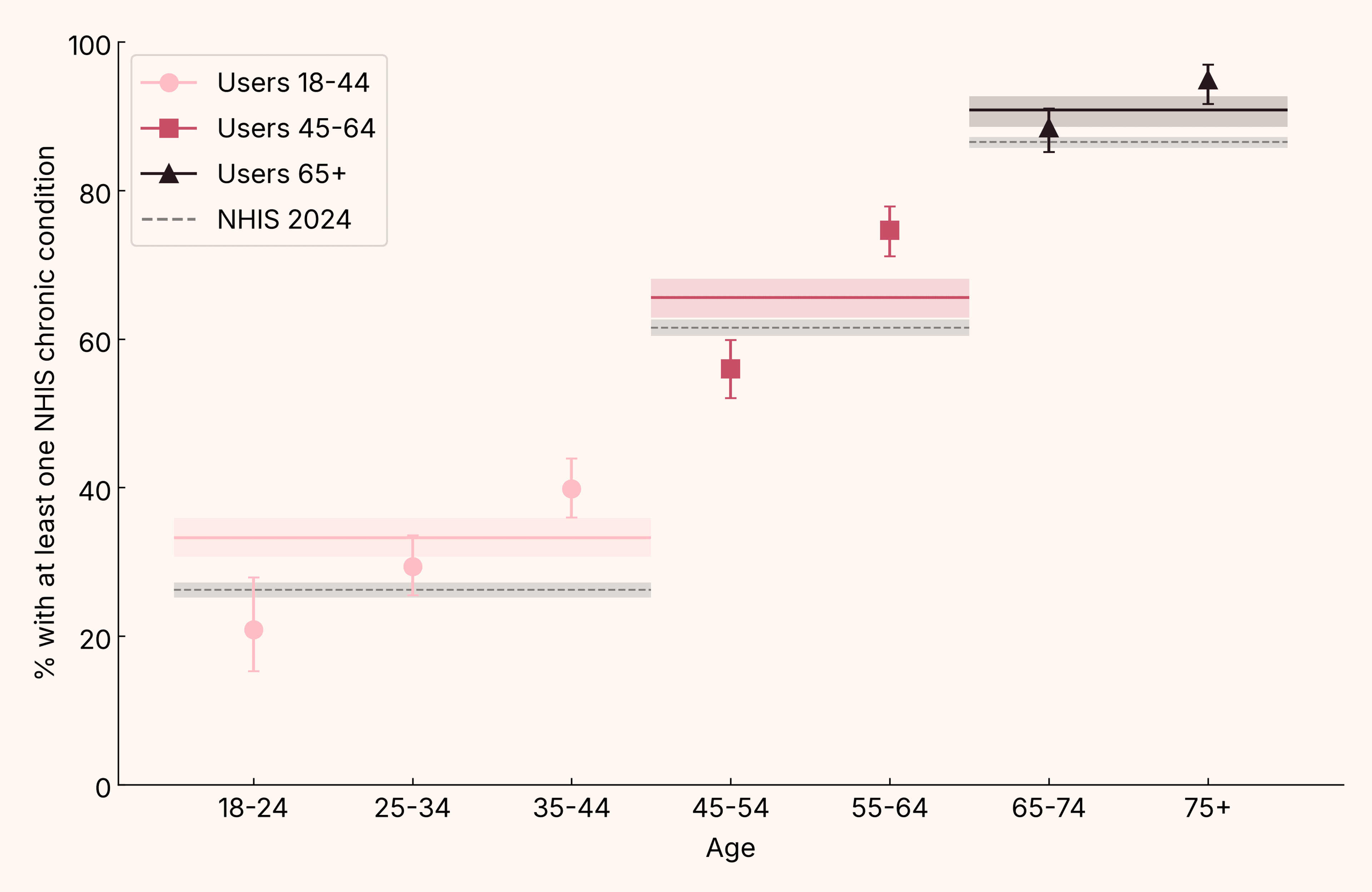
Share of users with chronic disease by age bin, Lotus vs. national baseline.
Separately, we also measured the prevalence of a group of complex chronic conditions (e.g. IBS, fibromyalgia, long COVID) that are hard to diagnose and manage within the traditional healthcare system. On our platform, 18% of users had these conditions. These users generated disproportionately more escalations to physicians. The increase in escalations resulted in more lab orders, but not prescriptions or follow-up messages. These patients often go through lengthy, excessive testing as has been observed in outpatient settings. A platform that can assemble scattered records and synthesize long histories like Lotus is well placed to help if it is grounded in evidence-based practices.
Users had highly fragmented healthcare prior to joining Lotus
One of the core promises of Lotus is that it integrates all available health data regardless of the source into a single platform. Towards that end, Lotus integrates health records from various hospital systems, labs, pharmacies, insurance providers, and wearable devices on behalf of users. We measured how scattered the records were across different healthcare providers. We found that Lotus users had significant care fragmentation in the year before they joined.
In this analysis, we only included Lotus users with more than 4 visits in the year prior to joining Lotus. For the median user in this group, 40% of all their visits were with their most frequently seen provider, and the rest 60% were with less frequent providers. In other words, the majority of their visits were not with their most frequent provider.
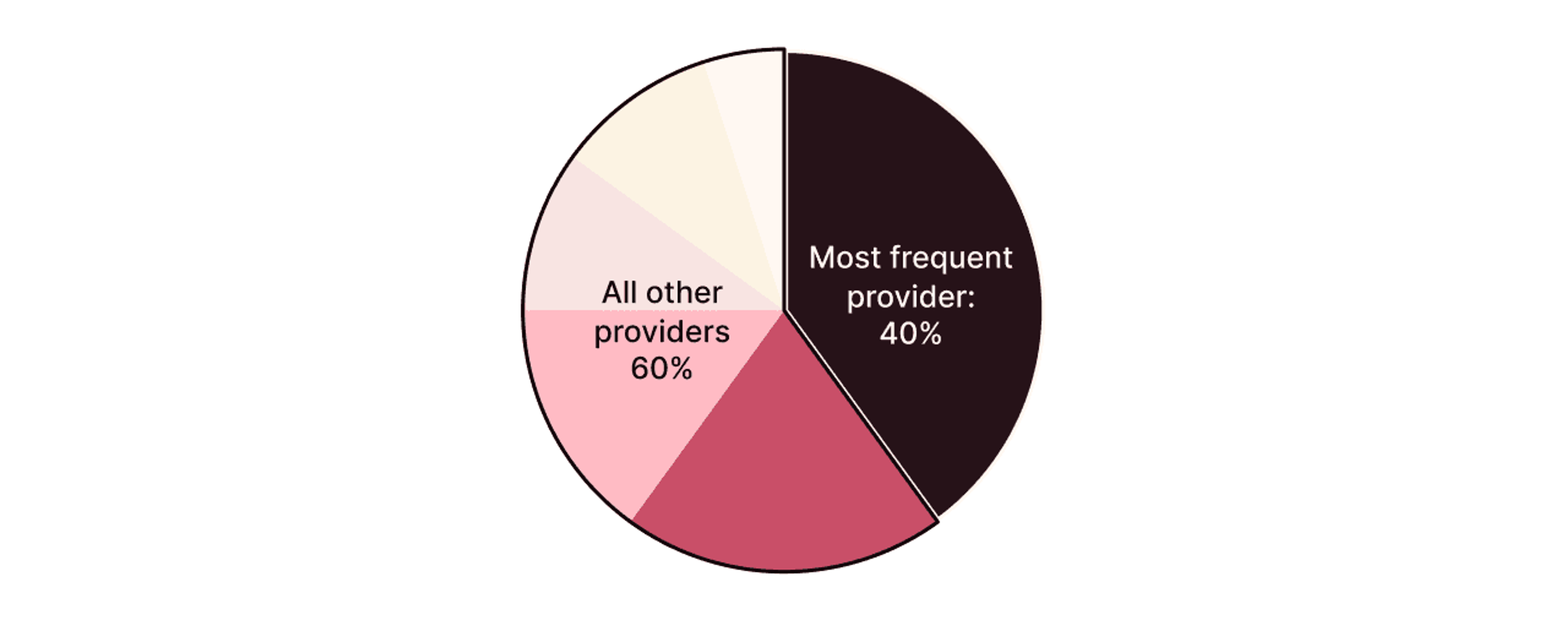
Care fragmentation among Lotus users with 4 or more visits in the year before joining.
The scientific literature reports that 26% of Medicare recipients and 33% of older veterans had highly fragmented care. When we use the same methodology on Lotus users, we find that 44% of Lotus users meet the criteria for high care fragmentation. After stratifying by age, young Lotus users had similarly high levels of care fragmentation as older age groups. Also, Lotus users with functional disorders had greater fragmentation even after adjustment for visit count.
With Lotus as the central platform, our goal is to reduce care fragmentation and improve care coordination and clinical management. These findings mean that Lotus needs to route escalations to a consistent clinical team and share visit summaries across team members effectively. We are working to assess fragmentation at enrollment and over time as one indicator of how our platform influences care continuity through information sharing and integrated care coordination.