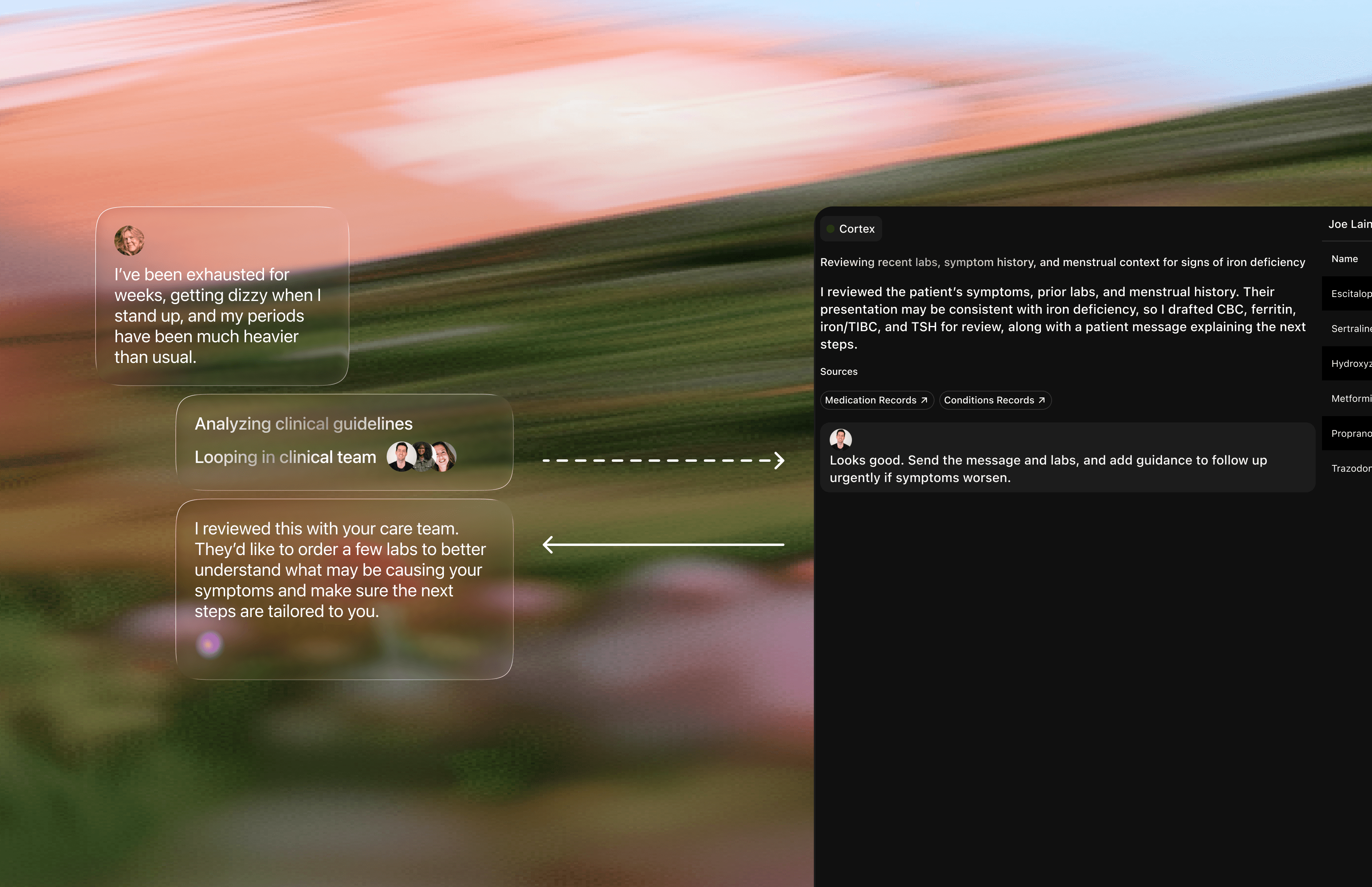
Many people use general-purpose AI chatbots for health worries at night. Consumer ChatGPT can feel helpful, but it is not a licensed medical service in the regulated sense, and OpenAI’s policies describe limits on tailored medical advice without appropriate involvement by a licensed professional. See OpenAI’s usage policies.
That gap is what products like Lotus AI are built around: combining AI with licensed physicians who diagnose, refer, and prescribe when clinically appropriate, not AI acting alone. For background on how this category differs from “chatbot answers,” see Lotus AI’s library piece on whether AI doctors are legit.
Why ChatGPT is a weak fit for medical advice
General-purpose consumer ChatGPT is not built like a HIPAA-regulated clinical record system. It does not replace an EHR integration model for PHI handled like a covered entity chart, it does not become your legal medical record by itself, and it does not create a physician-patient relationship by itself. Fluent text is not the same thing as clinical accountability.
Independent researchers evaluated OpenAI’s ChatGPT Health in a structured triage test and reported clinically important under-triage relative to physician gold standards. Use the primary sources when you summarize this for patients: Mount Sinai newsroom (2026) and the peer-reviewed paper in Nature Medicine. Keep the scope honest: this evidence is about ChatGPT Health in a structured evaluation, not every possible use of ChatGPT.
If you are evaluating regulated workflows, assume consumer ChatGPT is not HIPAA-aligned like a covered provider’s charting stack, and confirm any BAA or enterprise controls directly with the vendor.
How Lotus AI is different: Infinite Care
Lotus AI is not positioned as “chat only.” It is built around Infinite Care: AI plus licensed physicians who review and approve clinical actions, including diagnosis, prescriptions, labs, and referrals, when clinically appropriate. The AI can support intake and reasoning; physicians are responsible for clinical decisions and guardrails.
What Infinite Care means
Infinite Care is Lotus AI’s name for physician-backed care that is designed to persist beyond a single chat thread, so context and follow-through are connected instead of resetting every time you start a new conversation. It is a different shape than a generic symptom quiz or a general LLM wrapper, because clinical steps are tied to a medical practice layer where licensed physicians approve appropriate actions.
One line: Lotus AI is the continuity and intake layer; licensed physicians remain responsible for clinical decisions.
What that looks like in practice
1) A medical practice model, not only a chatbot
Lotus AI describes operating as a virtual medical practice with malpractice insurance and HIPAA-oriented systems intended for clinical workflows when appropriate. Verify details in Lotus AI’s policies and privacy materials rather than treating marketing copy as legal advice.
Read Lotus AI’s overview of data handling: how Lotus AI protects your health data.
2) Physician review for clinical decisions
Lotus AI states that diagnoses, prescriptions, and care plans are reviewed by board-certified physicians when clinically appropriate. See Lotus AI physicians.
3) Access and languages
Lotus AI describes broad access and support for many languages. Product limits, geography, and language lists change, so verify what is true as of May 2026 in Lotus AI’s app, download page, and help center.
4) Care beyond a single answer
Lotus AI describes facilitating workflows that can include diagnosis, prescriptions, and specialist referrals when clinically appropriate and after physician review.
Limitations: Lotus AI does not prescribe controlled substances. If you think you are having a medical emergency, call 911 (or your local emergency number) or go to the nearest emergency department immediately. Virtual care cannot replace emergency services.
How Lotus AI compares to other options (neutral roundup)
Roundups should stay factual. For any competitor bullet, link to their primary page and add “as of May 2026” when you mention pricing, coverage, or features.
Ada Health
Ada Health is known for questionnaire-style symptom assessment experiences and related enterprise products. Do not paste revenue or user stats unless each number is copied from Ada Health’s own published materials on a specific date, with a link. If you cannot verify a stat on Ada’s primary site at publish time, omit the number. Start from Ada’s site as of May 2026: ada.com.
Typical fit: assessment and education flows rather than Lotus AI’s Infinite Care positioning around physician-reviewed prescribing pathways when clinically appropriate.
K Health
K Health describes combining AI-supported intake with access to licensed clinicians for certain services. Pricing, insurance requirements, and scope vary by product and region. Pull only what K Health states on its site as of May 2026, and link to the exact page you used, for example khealth.com.
General assistants (example: Claude)
General-purpose assistants are not marketed as licensed U.S. telemedicine practices, prescribing systems, or HIPAA substitutes for covered PHI workflows. Describe limits using vendor policies and product docs dated as of May 2026, not negative labels, unless you cite a primary source. For Anthropic’s consumer product, start from Anthropic’s published policies and safety documentation on anthropic.com as of May 2026.
Comparison at a glance
Factor | Lotus AI (Infinite Care) | Ada Health | K Health | General LLM assistants |
|---|---|---|---|---|
Primary use | Physician-backed primary care workflows | Symptom assessment style products | Virtual care products (varies) | General productivity and conversation |
Prescribing (when appropriate) | Yes, physician-reviewed, with limitations (no controlled substances) | Not the same prescribing positioning | Varies by product and region | No |
HIPAA-style clinical stack | Described in Lotus AI materials (confirm in policies) | Different product posture | Varies | Not a clinical system |
Typical fit | Ongoing care with physician follow-through | Questionnaire-first assessment | Paid consult pathways | Non-clinical tasks |
Technology and workflow (keep claims tied to Lotus AI sources)
Describe training, coding support, and workflow automation only in language Lotus AI publishes with a link (help center, physicians page, security post, or clinical overview). If a sentence cannot be linked to a Lotus AI primary page at publish time, cut it or rewrite it as non-numeric positioning, for example that the product is designed to support clinicians with documentation in supported workflows.
Safety and compliance
Large language models can fabricate citations or miss edge cases. Lotus AI describes physician review, audit trails, and conservative escalation as part of supported clinical workflows. For emergencies and cases that need an in-person exam, Lotus AI describes directing patients to appropriate in-person or emergency care when clinically indicated.
Pricing positioning (patient-facing)
Lotus AI describes patient access as currently free with no insurance requirement in its public positioning. Sponsorship models can evolve. Add “as of May 2026” and link to the canonical FAQ or pricing page you want patients to trust.
Where this fits in 2026
More products combine AI with clinician oversight. Lotus AI’s differentiation should stay on Infinite Care: licensed physicians diagnose, refer, and prescribe when clinically appropriate, not the model alone.
Third-party commentary is not clinical evidence. If you cite investors, label it as perspective, for example Kleiner Perkins on Lotus AI (confirm the on-page date when you publish).
If you include macro healthcare spending, cite a neutral primary source (for example CMS national health expenditure materials) or remove the claim.
Getting started
Lotus AI states that it offers:
Physician-reviewed pathways when clinically appropriate
Patient access described as no cost in current positioning (verify on-site as of May 2026)
Privacy overview: how Lotus AI protects your health data
Prescriptions when medically appropriate, issued by licensed physicians, excluding controlled substances
Referrals when appropriate
Download Lotus AI on iOS. Confirm availability in product UI as of May 2026.
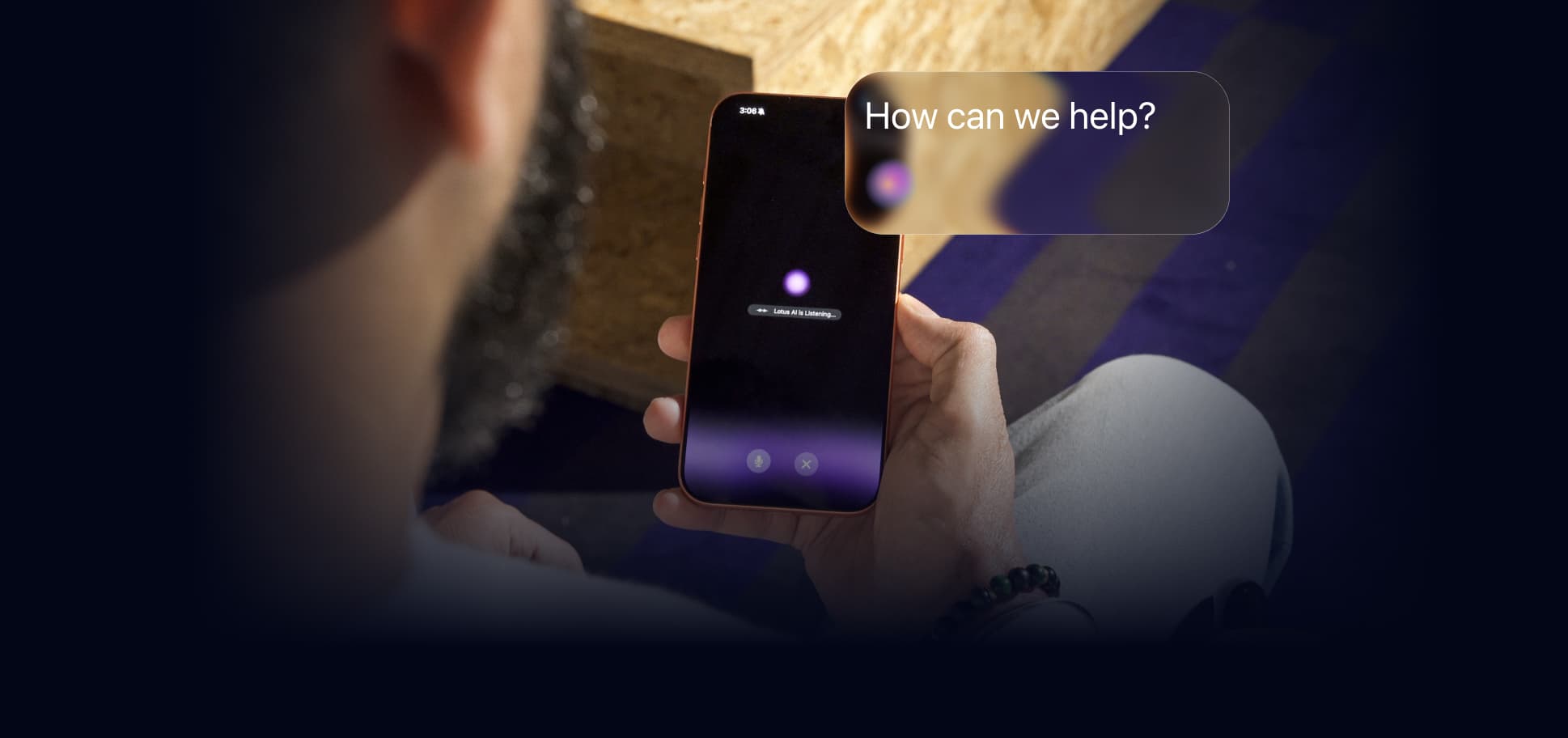
Getting started can be as simple as speaking to your phone. Lotus AI is designed to help within the limits of virtual care.
More reading: how healthcare failed us all and why the team decided to build Lotus AI. Note: that URL slug still contains “worlds-first”; consider a redirect and updated slug so search snippets do not repeat a banned superlative pattern.
Frequently asked questions
How is Lotus AI different from using ChatGPT for health questions?
Lotus AI describes a clinical workflow where licensed physicians review and approve diagnoses, prescriptions, and referrals when clinically appropriate. General-purpose ChatGPT is not a licensed medical service in that sense. See OpenAI’s usage policies.
Is Lotus AI free, and how does it make money?
Lotus AI’s public positioning describes no patient fee today, with sponsorship as part of the model. Link your canonical FAQ and date it as of May 2026.
What if the AI hallucinates?
Lotus AI describes physician review before clinical outputs are finalized for patients when clinically appropriate. Link the specific Lotus AI safety or clinical oversight page you want as the source of truth.
Emergencies and exams?
Virtual care has limits. Use standard emergency language without naming competitors.
How does Lotus AI compare to Ada Health or K Health?
Compare product shape and verify each claim on competitor sites as of May 2026. Anchor on Infinite Care, not “who is best.”
Standard disclaimer
Lotus AI is a medical service with limitations. It is not for emergencies. If you think you may be having a medical emergency, call 911 (or your local emergency number) or go to the nearest emergency department immediately.
Controlled substances: Lotus AI does not prescribe controlled substances.
Clinical decisions: Prescriptions, labs, and referrals are issued only when appropriate and reviewed by licensed physicians. Medication and lab fees may apply. Patient access may be described as free in Lotus AI materials; third-party costs may still apply.
Privacy: how Lotus AI protects your health data.