People hear “AI doctor” and wonder what is legal today, what is still a pilot, and where a licensed clinician sits in the loop. This guide separates three ideas that often get mixed together: general chatbots, telemedicine services that use software to speed intake and documentation, and state sandbox programs that publish narrow rules for certain digital workflows.
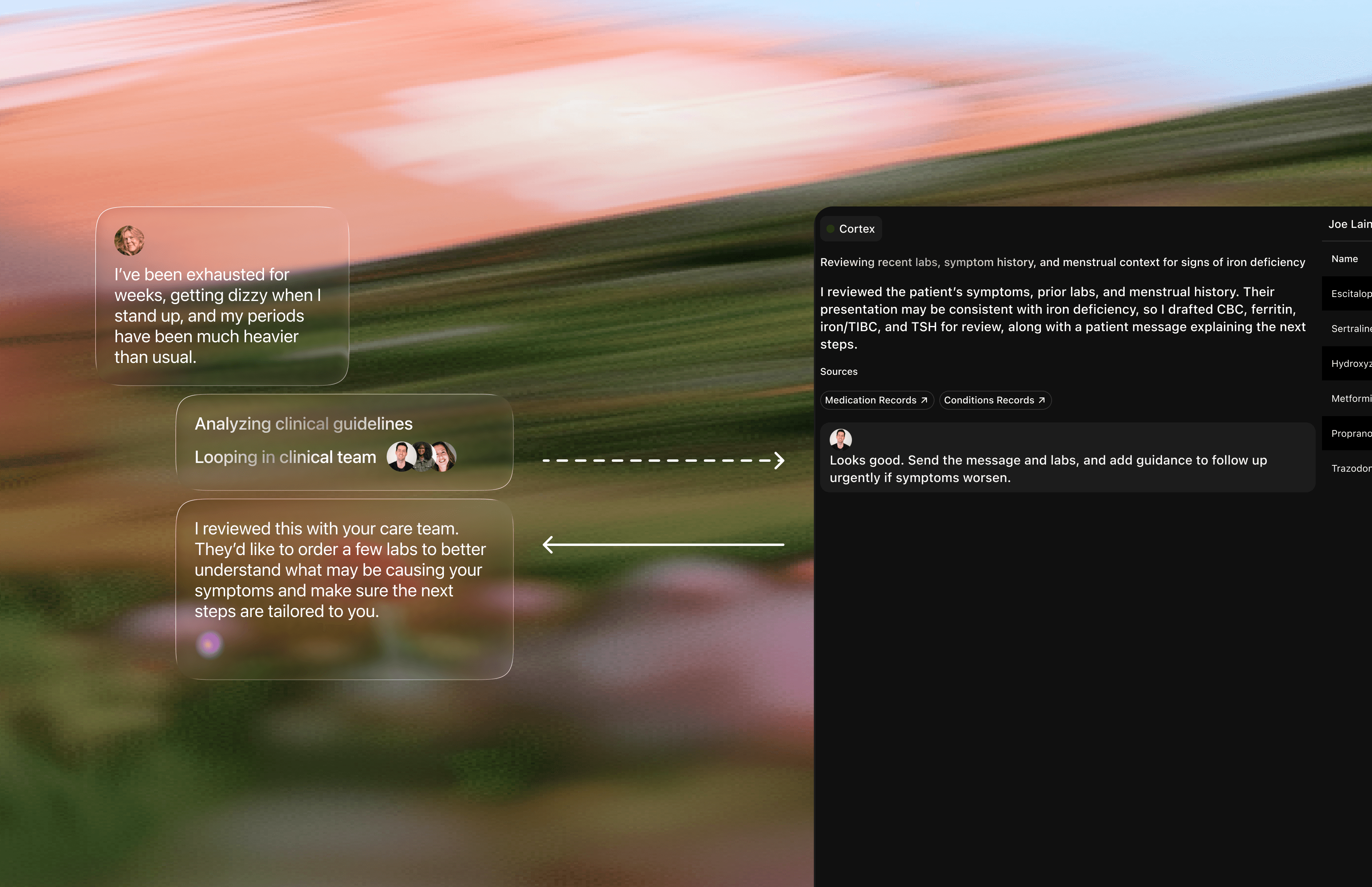
If you are reading about Lotus AI, the short version is that Lotus AI combines software with licensed physicians who diagnose, refer, and prescribe when clinically appropriate through Infinite Care, a model designed so clinical decisions are not finalized by software alone.
Federal proposals and what is actually law today
Congress can propose major changes long before they become law. On January 7, 2025, Representative David Schweikert introduced the Healthy Technology Act of 2025 (H.R. 238). The bill text addresses whether certain artificial intelligence and machine learning technologies could qualify as a “practitioner” eligible to prescribe drugs under the Federal Food, Drug, and Cosmetic Act, subject to FDA and state authorization frameworks described in the proposal.
Primary sources:
Bill summary and status: GovTrack, H.R. 238 (119th Congress)
Sponsor office overview: Congressman Schweikert, February 5, 2025
As of May 2026, this is a proposal, not a settled national rule that replaces existing prescribing and telemedicine law.
State pilots: why Utah is in the news
Some states publish regulatory sandbox materials that describe limited, supervised digital health programs, often with reporting requirements and defined scopes. Utah’s Department of Commerce posted public materials describing a sandbox pathway involving Doctronic for certain prescription renewal workflows.
Primary sources:
Utah Commerce news release (January 6, 2026): Utah and Doctronic announcement
Agreement hub page: Utah Commerce AI agreements, Doctronic
Details like eligible medication categories, exclusions, whether the program is limited to renewals, and the demonstration period should follow what those official pages say as of your visit date. If a company publishes performance statistics, treat them as vendor-reported, link the exact page, and date them as of May 2026.
What “AI-assisted” prescribing should mean (and what it should not mean)
AI-assisted care usually means:
Software collects structured intake (symptoms, history, medications, allergies).
Software may organize information into a draft clinical summary for a clinician.
A licensed physician (or other licensed prescriber where legally permitted) decides what is medically appropriate, including whether to prescribe, adjust treatment, refer, or escalate to urgent or emergency care.
What it does not mean in plain patient language:
It does not mean a general-purpose chatbot is a substitute for emergency evaluation.
It does not mean “the AI prescribed it” in a literal sense on serious clinical platforms, because prescribing is a licensed medical act tied to a clinician and a medical service, not a language model running alone.
If you compare to ChatGPT, keep the boundary factual: consumer ChatGPT is not your medical record, not your prescribing clinician, and not a HIPAA replacement for covered workflows. See OpenAI’s usage policies.
Comparison paths people use in 2026
This is a category map, not a ranked list of winners.
Lotus AI (Infinite Care)

Lotus AI combines software with licensed physicians through Infinite Care.
What Infinite Care means
Infinite Care is Lotus AI’s name for physician-backed care that is designed to persist beyond a single chat thread, so context and follow-through are connected instead of resetting every time you start a new conversation. Clinical steps are tied to a medical practice layer where licensed physicians review and approve diagnoses, prescriptions, labs, and referrals when clinically appropriate.
Lotus AI states that the AI does not autonomously finalize prescriptions. Clinical actions are reviewed and finalized by a licensed physician when clinically appropriate. See Lotus AI physicians.
Funding: Lotus AI’s Series A financing has been reported in independent press. Example sources (confirm figures in the articles as of your publish date): TechCrunch, February 3, 2026 and Fenwick client update on the Series A.
Privacy and security overview: how Lotus AI protects your health data.
A patient story example: Chuck medication understanding.
Cost and access: describe patient fees and sponsorship only the way Lotus AI publishes them on-site, and treat that information as current as of May 2026.
Doctronic (Utah sandbox participant)
Utah’s published sandbox pages describe a limited program involving Doctronic. The public materials are the right place to check what is in scope, what is excluded, and how the demonstration period works. Start with the Utah Commerce links in the section above rather than relying on secondary summaries alone.
General-purpose assistants (example: ChatGPT)
These tools can help with general questions and logistics, but they are not a substitute for a licensed prescribing clinician in a regulated medical service. See OpenAI’s usage policies.
Concierge medicine and direct primary care
Some patients choose concierge or direct primary care when they want faster access and longer visits with a human clinician. Pricing and scope vary by practice. If you mention fees, use the practice’s own pricing page as of May 2026.
Traditional primary care and in-person care
In-person care remains important for many diagnoses, physical exam findings, procedures, and emergency symptoms.
Comparison at a glance
Topic | Lotus AI (Infinite Care) | Utah sandbox example (Doctronic materials) | General assistant (example: ChatGPT) | Concierge / DPC | Traditional in-person care |
|---|---|---|---|---|---|
Who can prescribe | Licensed physicians finalize prescribing when clinically appropriate (per Lotus AI positioning) | Scope is defined by Utah’s published sandbox rules and agreement terms | Not a prescribing medical service in the clinical sense | Licensed clinicians per practice model | Licensed clinicians |
Typical use | Ongoing primary care workflows with physician review | Narrow renewal pilot per state materials | Education and general Q&A, not a chart | Access and relationship model | Exam-based care and procedures |
Patient verification | Per Lotus AI policies and onboarding | Per Utah Commerce posted requirements | Not applicable as clinical prescribing | Per practice | Per clinic |
How software-supported prescribing workflows usually work
Many mobile care products include voice input so you can answer intake questions hands-free. That is mainly an accessibility and convenience feature for structured questions, not a replacement for clinical decision-making.
A simple sequence looks like this:
Structured intake: symptoms, medications, allergies, and history.
Clinical support: software may organize information for physician review.
Physician decision: a licensed physician decides whether prescribing, labs, referral, or escalation is appropriate.
Fulfillment: if prescribed, routing follows normal pharmacy processes.
Avoid wording that implies a model signs prescriptions independently. In patient language, the physician issues the prescription when appropriate.
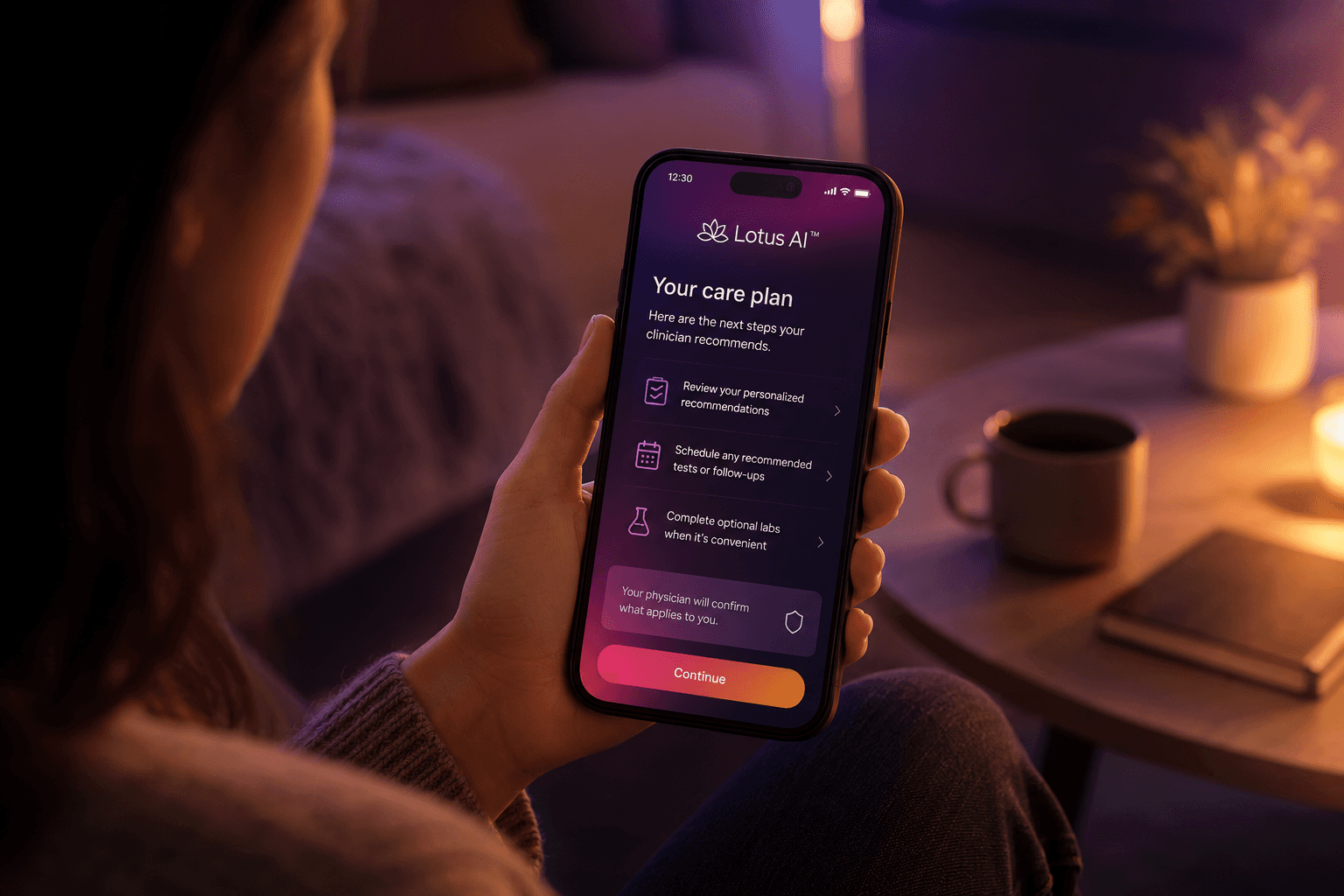
Voice features can make intake easier when typing is inconvenient, but emergency symptoms still require emergency services.
Important limitations and safety considerations
Many telemedicine platforms exclude or tightly control controlled substances and other high-risk categories. For Lotus AI-specific exclusions, rely on Lotus AI’s published policies (for example, Lotus AI states it does not prescribe controlled substances).
Emergencies: If you think you are having a medical emergency, call 911 (or your local emergency number) or go to the nearest emergency department.
Where policy and products may head in 2026
Law and clinical practice change on different clocks. Federal proposals can move slowly and may stall in committee, so it helps to check official bill status on your publish date, for example through GovTrack for H.R. 238.
States may continue publishing sandbox programs with narrow scopes. When you read a headline about a state, go to the state’s primary page for the details.
Independent evaluation of consumer-facing health tools is increasing. If Lotus AI expands this article later, peer-reviewed research and regulator guidance are stronger anchors than social summaries alone.
Choosing a path for prescription needs
Who legally prescribes, and who is medically responsible
What medications are excluded
Cost, insurance, and billing
Emergency escalation and referral behavior
Privacy and records (start here for Lotus AI: how Lotus AI protects your health data)
Frequently asked questions
Can AI legally prescribe all medications?
In plain language, AI does not replace a licensed prescriber. What varies is whether software is used inside a clinician’s workflow, and what a specific program excludes. Check each platform’s policy pages as of May 2026.
How accurate are “AI recommendations”?
Separate vendor-reported benchmarks from peer-reviewed outcomes evidence. If you cite a vendor statistic, link the vendor’s primary page and date it.
Is Lotus AI free?
State only what Lotus AI publishes, with a link to the canonical FAQ or pricing page, dated as of May 2026.
Which states allow “AI prescribing”?
There is not one simple national answer. Utah published specific sandbox materials linked above. Other services may operate under telemedicine rules that vary. Confirm eligibility and disclosures in-app.
How fast can a prescription happen?
Only publish timelines that Lotus AI supports in product copy or help center, dated as of May 2026.
What makes Lotus AI different?
Lotus AI points to Infinite Care: licensed physicians diagnose, refer, and prescribe when clinically appropriate, with software supporting the workflow rather than replacing physician responsibility.
For more reading: Lotus AI news and patient stories.
Standard disclaimer
Lotus AI is a medical service with limitations. It is not for emergencies. If you think you may be having a medical emergency, call 911 (or your local emergency number) or go to the nearest emergency department immediately.
Controlled substances: Lotus AI does not prescribe controlled substances.
Clinical decisions: Prescriptions, labs, and referrals are issued only when appropriate and reviewed by licensed physicians. Medication and lab fees may apply. Third-party costs may still apply.
Privacy: how Lotus AI protects your health data.