Lotus Health AI
clinical AI
Primary Care AI
HIPAA Compliance
Health Data Privacy
When anxiety spikes at 2 a.m. or you're not sure whether what you're feeling is depression, waiting weeks for an appointment is not the only option — remote mental health support can connect you with real clinical care the same day, from wherever you are.
What remote mental health support actually is
Remote mental health support is the delivery of mental health care through secure digital tools — video, phone, messaging, or an app — instead of an in-person office visit. You may also hear it called telehealth, teletherapy, virtual mental health services, or behavioral health telehealth. All of these terms describe the same core idea: a licensed clinician evaluates your symptoms, develops a care plan, and follows up with you without requiring you to travel to a clinic.
This kind of care can come from different types of providers. Some platforms focus exclusively on therapy. Others are full primary care practices that handle mental health alongside physical health — screening, diagnosing, prescribing non-controlled medications, ordering labs, and referring to specialists when needed. Knowing the difference helps you choose the right starting point for your situation.
What mental health services are available remotely
Remote care covers more than most people expect. You are not limited to a single video call with a therapist. Depending on the platform and the clinician, you can receive a full range of services — from an initial screening to an ongoing care plan.
Screening and diagnosis
A licensed clinician can perform a mental health assessment remotely using validated screening tools and a structured clinical interview conducted over video or secure messaging. This process can identify conditions such as anxiety, depression, insomnia, and PTSD symptoms. A diagnosis is a clinical determination made by a licensed professional — not an automated quiz result. Some conditions, such as ADHD, may begin with a remote screening but require additional history or a specialty referral to complete the evaluation.
Prescriptions for non-controlled medications
When clinically appropriate, a remote clinician can prescribe non-controlled medications. For mental health, this commonly includes antidepressants such as SSRIs (selective serotonin reuptake inhibitors) and SNRIs (serotonin-norepinephrine reuptake inhibitors) — the two most widely used medication categories for anxiety and depression. Prescriptions are always a clinical decision reviewed by a licensed physician, not an automatic outcome of signing up.
One important boundary: controlled substances — including benzodiazepines [1] (anti-anxiety medications like Xanax), stimulants (used for ADHD), and opioids — cannot be prescribed online [2] without an in-person evaluation [3] under the Ryan Haight Online Pharmacy Consumer Protection Act [4]. Any platform that claims otherwise should be approached with caution.
Therapy and psychiatry referrals
Remote primary care can identify when you need specialized psychotherapy or a psychiatric evaluation and generate a referral. Common therapy types include:
CBT (cognitive behavioral therapy): A structured approach that helps you identify and change unhelpful thought patterns
DBT (dialectical behavior therapy): Focuses on emotional regulation and distress tolerance
EMDR (eye movement desensitization and reprocessing): Used for trauma processing
Some platforms offer therapy directly. Others, like an AI doctor with physician oversight, focus on primary care and refer out for ongoing psychotherapy or psychiatry when that level of care is the right fit.
Lab orders to rule out physical contributors
A remote clinician can order blood work when physical health may be contributing to mental health symptoms. Fatigue and low mood, for example, can sometimes be linked to thyroid dysfunction or other medical conditions. You visit a local lab for the draw — the clinician reviews the results and adjusts your care plan accordingly. This step is often skipped in therapy-only platforms but matters when the full picture is unclear.
Ongoing check-ins and monitoring
Follow-up is one of the most important parts of remote mental health care, especially after starting a new medication. Monitoring includes tracking symptom changes, watching for side effects, and adjusting the care plan over time. Your clinician will tell you what to watch for and when to reach out. This continuity is what separates a real care plan from a one-time consultation.
Is virtual mental health care effective and safe
The short answer is yes — for many people and many conditions, virtual care can be just as effective as in-person visits. Research reviewed by the American Psychological Association and the National Institute of Mental Health has found that telehealth-delivered care can produce comparable outcomes to in-person visits for mild-to-moderate anxiety and depression, particularly when it includes structured follow-up and clinician oversight.
Privacy and security in telehealth
HIPAA (the Health Insurance Portability and Accountability Act) is the federal law that protects your personal health information. Any legitimate remote mental health platform should be HIPAA-compliant, encrypt your data, and clearly explain whether your information is shared with third parties. Before signing up for any service, ask: Is this platform HIPAA-compliant? Is my data sold or shared? Can I opt out of data collection?
Clinician oversight and when to escalate
There is a meaningful difference between a general AI chatbot that provides health information and a clinical-grade platform where licensed physicians review recommendations and are accountable for clinical decisions. The safest remote mental health tools include conservative escalation — meaning they tell you clearly when your symptoms need in-person or emergency care rather than continuing virtual management. That layer of physician oversight is what makes remote care trustworthy rather than risky.
Who remote mental health support is and is not right for
Remote care is not a one-size-fits-all solution. The right level of care depends on your symptoms, your history, and how acute your situation is.
When telehealth is a good fit
Most people searching for remote mental health support are good candidates for virtual care. Common situations where telehealth works well include:
Anxiety or worry that interferes with daily life: Remote screening and treatment can begin the same day
Persistent low mood or loss of interest: A clinician can evaluate, diagnose, and start a care plan remotely
Sleep difficulties: Insomnia assessment and behavioral guidance translate well to virtual visits
Medication questions or refills: Stable patients can manage refills and side-effect monitoring remotely
Limited access to in-person care: People in rural areas, those with mobility limitations, or anyone facing long appointment wait times
When to seek in-person or emergency care
Some situations require hands-on evaluation or immediate intervention. Remote care is not the right tool for every moment.
If you are in crisis: Call or text 988 [5] to reach the Suicide & Crisis Lifeline [6], available 24 hours a day [7], 7 days a week [8]. For life-threatening emergencies, call 911 or go to the nearest emergency room.
Situations that require in-person or emergency care include thoughts of harming yourself or others, severe psychiatric symptoms such as psychosis or uncontrolled mania, and serious intoxication or withdrawal. Remote tools — including an AI doctor — can help you assess symptoms and understand the right level of care, but they are not a substitute for emergency services when your safety is at risk.
How Lotus AI can help with remote mental health support
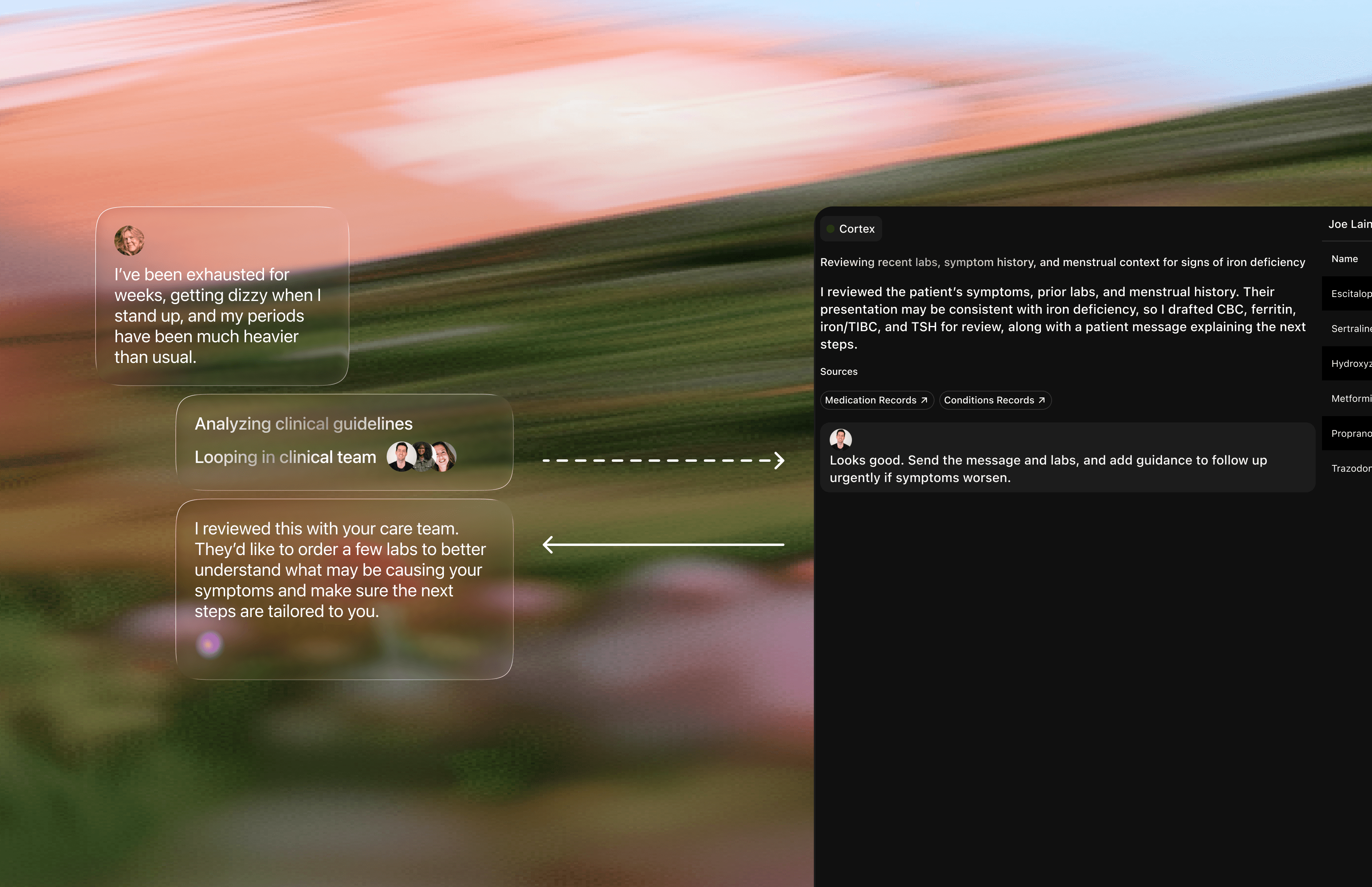
Lotus AI is a free AI doctor powered by real physicians — a primary care practice available 24 hours a day, 7 days a week, with no scheduling, no waiting room, and no insurance required. It is built on millions of peer-reviewed studies and all major clinical guidelines, with real clinicians from institutions including UC Davis Health, UCSF, Stanford Medicine, and Harvard Medical School reviewing recommendations for accuracy and safety.
Available anytime, in any language
Mental health symptoms do not follow office hours. Lotus AI is available whenever you need it — including at 2 a.m. on a Sunday — in over 50 languages. You can ask any health question, describe your symptoms in your own words, and receive guidance grounded in clinical evidence without waiting weeks for an appointment slot.
Guidance built on your full health picture
Lotus AI aggregates your medical records, lab results, current medications, and wearable data into one place. This means mental health guidance reflects your complete health story rather than a single symptom in isolation. If you report fatigue and low mood, the AI doctor can consider your thyroid history, current medications, and recent labs — rather than guessing from fragments the way a one-off symptom checker would.
What Lotus AI can and cannot do for mental health
Lotus AI can | Lotus AI cannot |
|---|---|
Screen for depression, anxiety, and other primary care mental health conditions | Prescribe controlled substances (benzodiazepines, stimulants, opioids) |
Diagnose within primary care scope | Perform physical exams or procedures |
Prescribe non-controlled medications (e.g., SSRIs, SNRIs) when clinically appropriate | Manage acute emergencies — call 911 or text 988 |
Order labs to rule out medical contributors | Guarantee a prescription will be issued |
Refer to therapists, psychiatrists, or specialists | Cover the cost of medication |
Provide ongoing follow-up and medication monitoring | Connect you with a live physician in real time |
Triage symptoms and route to urgent care or the ER when needed |
Prescriptions and referrals are issued when appropriate, reviewed by licensed physicians.
How to start remote mental health support today
Getting started is simpler than most people expect. You do not need insurance, a referral, or a scheduled appointment to begin.
What you need
A smartphone or computer with a reliable internet connection
A private space where you feel comfortable discussing personal topics
Nothing else — Lotus AI is free, with no hidden fees, no surprise bills, and no data sales
Three steps to your first care plan with Lotus AI
Share your symptoms and goals — describe what you are experiencing in your own words, anytime, in any language
Get a personalized, evidence-based plan — Lotus AI evaluates your input against clinical guidelines and your unified health history, with physician oversight
Receive your next steps — this may include a prescription sent to your preferred pharmacy when appropriate, a lab order, a therapy or specialist referral, or a follow-up check-in schedule
Try Lotus AI free — no insurance, no scheduling, no cost.
_This article is for educational purposes only and does not provide medical advice, diagnosis, or treatment. Always consult a licensed healthcare professional for clinical decisions. For mental health crises, call or text 988. For life-threatening emergencies, call 911. Prescriptions and referrals issued when appropriate, reviewed by licensed physicians._
Sources
News Release: “Ryan Haight Online Pharmacy Consumer Protection Act of 2008 Signed Into Law” — U.S. Drug Enforcement Administration (DEA), 2008
“The Ryan Haight Online Pharmacy Consumer Protection Act of 2008 (Ryan Haight Act)” — American Bar Association, Health Law Section (eSource), 2023
“DEA Confirms Final Temporary Extension of COVID‑19 Telemedicine Rules Through 2026” — Lengea Law, 2026
21 U.S. Code § 829 – Prescriptions — Legal Information Institute, Cornell Law School
988 Suicide & Crisis Lifeline — Substance Abuse and Mental Health Services Administration (SAMHSA)
988 Suicide & Crisis Lifeline – Official site — 988 Lifeline
988 Suicide & Crisis Lifeline — Washington State Department of Health
988 Suicide & Crisis Lifeline — New York State Office of Mental Health