Physical Therapy
Misdiagnosis
Lotus Health AI
Primary Care Copilot
Vestibular migraine causes spinning, dizziness, and balance problems that can stop your day cold — and finding the right treatment often takes longer than it should because the condition is still widely misunderstood and misdiagnosed.
What is vestibular migraine
Vestibular migraine is a neurological condition where the brain's migraine activity disrupts the vestibular system — the inner-ear and brain network that controls balance and spatial awareness. The result is episodes of vertigo (a spinning or swaying sensation), dizziness, and unsteadiness that can last anywhere from five minutes to three days[1].
One of the most important things to understand: many attacks involve no headache at all. This is why vestibular migraine is so often missed or mistaken for something else. The same brain mechanisms behind typical migraine drive the vestibular symptoms, which is why migraine medications can help even when your head doesn't hurt.
Before treatment begins, an accurate diagnosis matters. The International Headache Society requires all four of the following for a confirmed diagnosis: at least five episodes[2] of moderate-to-severe vestibular symptoms lasting five minutes to seventy-two hours; a current or prior migraine history; at least one migraine feature[3] (headache, light or sound sensitivity, or visual aura) in at least half of episodes; and no better explanation from another condition. Getting that diagnosis right — and ruling out conditions like BPPV (brief positional vertigo triggered by head movements), Ménière's disease (a chronic inner-ear disorder), or stroke — is the essential first step.
Vestibular migraine symptoms and common triggers
Knowing your symptom pattern and what sets off your attacks is the foundation of any effective treatment plan.
Common symptoms include:
Vertigo: A spinning or swaying sensation even when you're completely still, lasting minutes to hours
Dizziness and unsteadiness: Feeling off-balance or lightheaded, especially with head movement
Motion sensitivity: Worsened symptoms in cars, on escalators, or when scrolling screens
Nausea and vomiting: Often accompanies vertigo episodes
Light and sound sensitivity: Classic migraine features that can appear with or without headache
Visual aura: Flashing lights, blind spots, or zigzag patterns before or during an episode
Common triggers include:
Disrupted or irregular sleep
Stress and anxiety
Hormonal changes, including menstruation and perimenopause
Dehydration and skipped meals
Specific foods: aged cheese, red wine, MSG, chocolate, processed meats, and caffeine
Weather or barometric pressure changes
Bright or flickering lights and loud environments
Keeping a symptom diary — tracking attacks alongside sleep, diet, stress, and hormonal patterns — is one of the most practical things you can do before your first appointment and throughout treatment.
How vestibular migraine is diagnosed
Diagnosis is clinical, meaning there is no blood test or scan that confirms vestibular migraine on its own. A clinician will take a detailed history and perform a targeted neurological exam covering eye movements, visual fields, cranial nerves, limb coordination, and gait.
Ruling out conditions that look similar is essential before starting treatment. BPPV is typically identified with the Dix-Hallpike test — a simple positional maneuver done in the office. Ménière's disease is distinguished partly through audiology testing, since low-frequency hearing loss favors that diagnosis over vestibular migraine. If your symptoms came on suddenly, feel like the worst of your life, or include facial drooping, arm weakness, or speech difficulty, urgent imaging is needed to rule out stroke or TIA (a mini-stroke). Vestibular function tests — which assess how well your inner-ear balance organs are working — should generally be normal in vestibular migraine; abnormal results raise suspicion for other vestibular disorders.
Vestibular migraine treatment options
Effective vestibular migraine treatment combines three pillars: fast-acting relief during attacks, preventive medication to reduce how often attacks happen, and lifestyle changes plus vestibular rehabilitation to rebuild balance and resilience over time.
Vestibular migraine treatment works best as a combination approach — acute relief for attacks, prevention to reduce their frequency, and lifestyle strategies to strengthen your baseline.
Acute medications for vestibular migraine attacks
The goal during an attack is to reduce vertigo, nausea, and pain as quickly as possible. Treating early — before symptoms escalate — consistently produces better results.
Start with these steps in order:
Rest in a dark, quiet room: Reduce sensory input immediately and avoid unnecessary head movement
NSAIDs (ibuprofen, naproxen): First-line per current acute migraine guidance; start as soon as symptoms begin. Avoid if you have kidney disease, an active stomach ulcer, or take blood thinners
Triptans (zolmitriptan, rizatriptan, sumatriptan): Frequently used for vestibular migraine and some evidence suggests vestibular symptom relief, though no large trial has specifically measured vertigo as a primary outcome. Reasonable to add if NSAIDs alone are insufficient. Avoid in hemiplegic migraine, uncontrolled high blood pressure, coronary artery disease, or history of stroke or TIA
Gepants (rimegepant, ubrogepant): Reserved for when NSAIDs and triptans haven't worked or aren't tolerated. Use with caution in severe liver impairment
Anti-nausea medications: Ondansetron is commonly used with a lower risk of movement-related side effects; avoid if you have a prolonged QT interval or take apomorphine. Prochlorperazine and metoclopramide can help but carry a risk of acute muscle spasms and movement disorders with repeated use — avoid in Parkinson's disease or a history of movement disorders
Vestibular suppressants (meclizine): May offer brief relief during severe spinning but lack specific high-quality evidence for vestibular migraine. Limit to short bursts during the worst episodes — prolonged use may interfere with the brain's natural ability to compensate and restore balance
One important safety note: because stroke and TIA can look exactly like a vestibular migraine attack, new or atypical symptoms always warrant evaluation before assuming it's migraine. Also avoid taking analgesics or triptans more than ten days per month[4] to prevent medication-overuse headache.
Preventive medications for vestibular migraine
If attacks are frequent, severe, or significantly affecting your daily life, preventive medication is worth discussing with a clinician. No large trials have specifically measured vertigo as a primary outcome for any of these agents — evidence is largely extrapolated[5] from general migraine prevention research. That said, multiple medications have shown meaningful benefit in smaller vestibular migraine studies.
Allow two to three months per medication trial[6] before deciding whether it's working. Start at a low dose and increase gradually.
Medication | What it does | Key considerations |
|---|---|---|
Beta-blockers (propranolol, metoprolol) | Reduce attack frequency; generally well tolerated | Avoid in asthma, resting bradycardia, significant heart block, or decompensated heart failure |
Tricyclic antidepressants (amitriptyline, nortriptyline) | Reduce attacks; helpful when insomnia or chronic pain coexist | Avoid in prolonged QT interval, recent heart attack, or high overdose risk; sedation and dry mouth are common |
Venlafaxine (SNRI) | Reduces attacks; may additionally improve low mood | Avoid in uncontrolled high blood pressure — can raise BP in a dose-dependent way; withdrawal syndrome risk if stopped abruptly |
Topiramate | Second-line after first-line failure | Cognitive slowing, tingling, kidney stones; teratogenic — avoid in pregnancy unless on reliable contraception |
Flunarizine (calcium channel blocker) | Small vestibular migraine-specific data; widely used in Europe | Not FDA-approved in the US; somnolence and weight gain common; long-term monitoring for parkinsonism needed |
CGRP monoclonal antibodies (erenumab, fremanezumab, galcanezumab) | Biologically plausible for vestibular symptoms; used off-label | No placebo-controlled RCTs with vestibular symptoms as primary endpoints yet; observational data suggest meaningful reductions in vertigo frequency[7]; typically tried after first-line options |
The right preventive depends on your full health picture — blood pressure, mood, pregnancy potential, weight, cardiac history, and other conditions all factor in. There is no single best answer.
Vestibular rehabilitation and lifestyle changes
Vestibular rehabilitation therapy (VRT) is a specialized form of physical therapy that retrains the brain to process balance signals more effectively. It is safe, has no meaningful side effects, and consistently shows improvement in vestibular migraine studies — particularly for balance, dizziness severity, and functional disability.
Supported approaches include:
Habituation exercises: Repeated exposure to movements that provoke symptoms, helping the brain adapt over time — these may initially worsen symptoms, so pacing matters
Gaze stabilization: Head-movement exercises that retrain the eye-movement reflex responsible for keeping vision steady
Balance training: Exercises on unstable surfaces to improve steadiness
Aerobic exercise: Emerging evidence suggests regular aerobic activity may reduce migraine frequency and support vestibular compensation
PT-guided VRT is generally preferred at the start, especially since habituation exercises can provoke symptoms if done too aggressively. Small vestibular migraine studies report initial improvement in dizziness and functional disability typically within six to eight weeks[8] of consistent practice, with more meaningful gains around twelve weeks. Concurrent preventive medication appears to improve VRT adherence and outcomes.
Lifestyle strategies that reduce attack frequency:
Keep a consistent sleep and wake schedule — sleep disruption is one of the most reliable triggers
Eat regular meals and avoid skipping — blood sugar drops can provoke attacks
Stay hydrated throughout the day
Manage stress through relaxation techniques, mindfulness, or cognitive behavioral therapy
Identify and reduce personal food and environmental triggers using a symptom diary
Moderate caffeine intake — both excessive use and abrupt withdrawal can trigger attacks
Supplements and devices
No supplement has RCT-level evidence specifically for vestibular migraine vertigo, but a few have guideline support for general migraine prevention and are low-risk additions to a broader plan.
Magnesium (glycinate or citrate, 400–600 mg/day): Has the strongest guideline support among supplements for migraine prevention. Main side effects are diarrhea and cramping. Reduce the dose or avoid in moderate-to-severe kidney disease (400–600 mg/day[9])
Riboflavin (vitamin B2, 400 mg/day): Small trial data suggest modest reduction in attack frequency; causes harmless bright-yellow urine but has no meaningful toxicity (Riboflavin (vitamin B2, 400 mg/day)[10])
CoQ10: Limited supporting data; no significant drug interactions or toxicity at typical doses
External trigeminal nerve stimulation and noninvasive vagus nerve stimulation have shown early promise in small uncontrolled vestibular migraine studies but need larger placebo-controlled trials before strong recommendations can be made. FL-41 tinted lenses[11] may help reduce light sensitivity between attacks.
How Lotus AI can help with vestibular migraine treatment
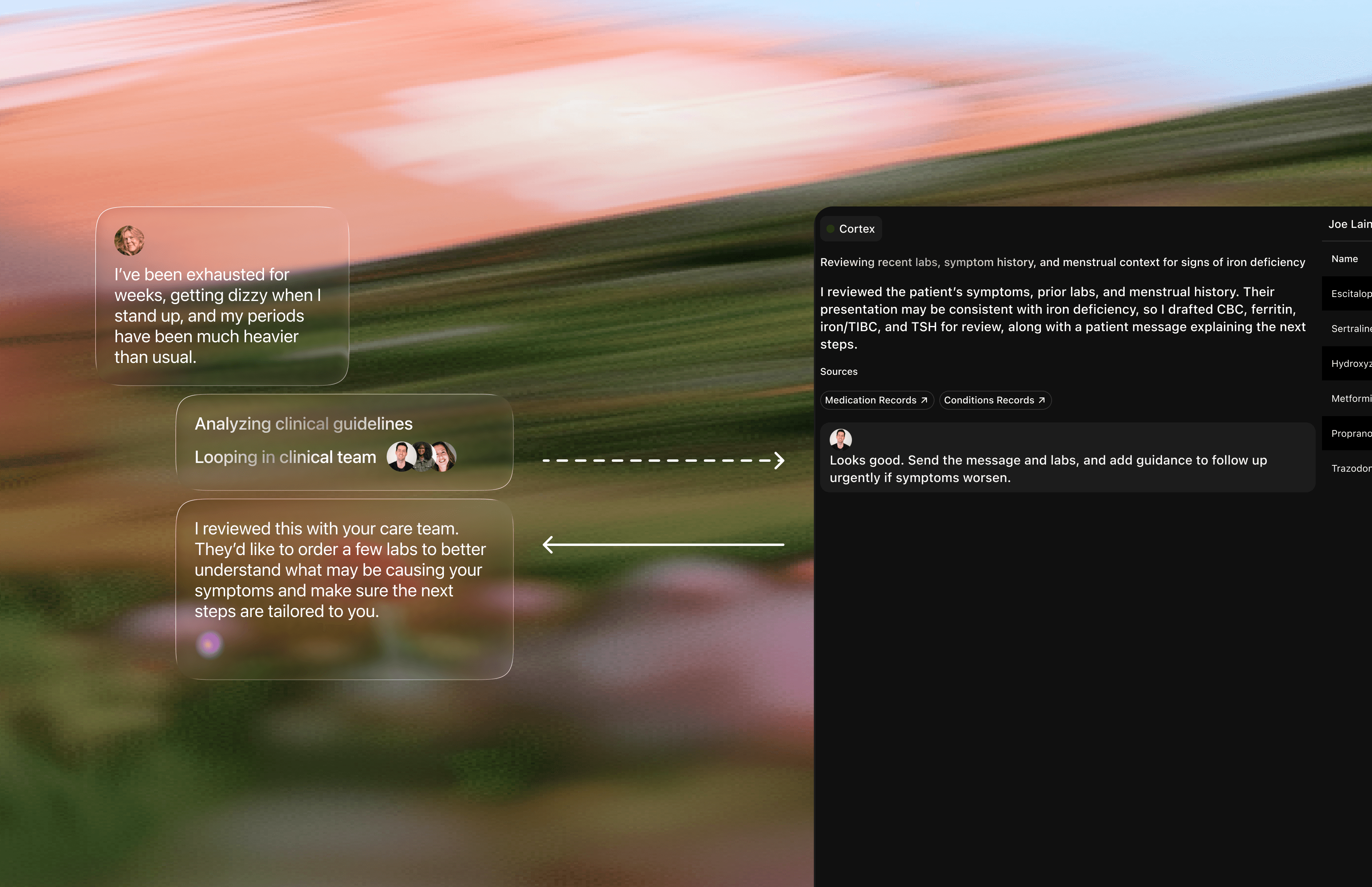
Navigating vestibular migraine treatment is genuinely complex — the right acute medication, the right preventive, the right rehab approach, and the right timing all depend on your individual health picture. That's where Lotus AI can help.
Lotus AI is an AI doctor powered by real physicians, available around the clock at no cost. You can describe your vertigo pattern, triggers, and health history and get evidence-based guidance on whether your symptoms fit vestibular migraine, whether something needs urgent evaluation, and which treatment approach makes sense for you specifically.
Here's what the AI doctor can do for vestibular migraine:
Assess your symptoms: Flag red-flag patterns that need emergency evaluation versus those consistent with vestibular migraine
Personalize your preventive plan: Based on your blood pressure, mood, medications, and other conditions, Lotus AI can help identify which preventive medication class fits your profile — and can prescribe non-controlled medications when clinically appropriate, with prescriptions sent to your preferred pharmacy
Track triggers and progress: Log attacks, sleep, diet, stress, and hormonal patterns in one place to build a personalized trigger-avoidance plan
Unify your health records: Aggregates your medical records, labs, and medications so guidance reflects your full history — not a single visit
Refer when needed: If you need vestibular function testing, specialist neurology evaluation, or a vestibular rehabilitation program, Lotus AI can refer you with your records already organized
Vestibular migraine treatment works best when it's continuous, personalized, and coordinated. Lotus AI gives you a free primary care practice — available 24/7, in any language — that can diagnose, prescribe when appropriate, and refer when something needs in-person care.
When to seek emergency care
Some symptoms that feel like vestibular migraine are actually neurological emergencies. Go to the emergency room immediately if you experience any of the following:
A sudden severe headache that feels like the worst of your life
Face drooping, arm weakness, or difficulty speaking
New double vision or sudden vision loss
Sudden hearing loss in one ear
Loss of consciousness
Vertigo with new numbness, weakness, or difficulty walking that does not resolve
These symptoms may indicate stroke or another neurological emergency — not vestibular migraine. Do not wait. Lotus AI can help with initial symptom triage and route you to the nearest emergency care, but it is not a substitute for emergency services.
Get a personalized vestibular migraine treatment plan — free
Ask about your symptoms and get evidence-based guidance anytime. Prescriptions when clinically appropriate, sent to your pharmacy. Track triggers, monitor progress, and adjust your plan with physician oversight.
Prescriptions and referrals issued when appropriate, reviewed by licensed physicians. Lotus AI is not for emergencies — if you have red-flag symptoms, seek urgent care immediately. This article is for educational purposes only and does not provide medical advice, diagnosis, or treatment. Always consult a licensed healthcare professional for diagnosis and treatment decisions.
Sources
Vestibular migraine — Dieterich et al., J Neurol, 2016
Vestibular Migraine (audiology clinic slide deck) — Bittel, 2024
Vestibular migraine: diagnostic criteria (update): consensus of the Bárány Society and International Headache Society — Bárány Society / International Headache Society, 2022
Medication-Overuse Headache — StatPearls (NCBI Bookshelf), updated 2023
Vestibular migraine treatment: a comprehensive practical review — Kaski et al., Brain, 2022
Clinical Pearls on Migraine Prevention — American Headache Society, 2017
Anti-calcitonin gene-related peptide monoclonal antibodies for the treatment of vestibular migraine: a prospective observational cohort study — Russo et al., Cephalalgia, 2023
Outcome of vestibular rehabilitation in vestibular migraine — Balci & Akdal, J Neurol, 2022
Headaches and Complementary Health Approaches: What the Science Says — National Center for Complementary and Integrative Health (NIH), updated summary
Effectiveness of high-dose riboflavin in migraine prophylaxis: a randomized controlled trial — Schoenen et al., Neurology, 1998
Shedding Light on Photophobia (Pediatric photophobia curriculum) — Moran Eye Center / University of Utah, 2023