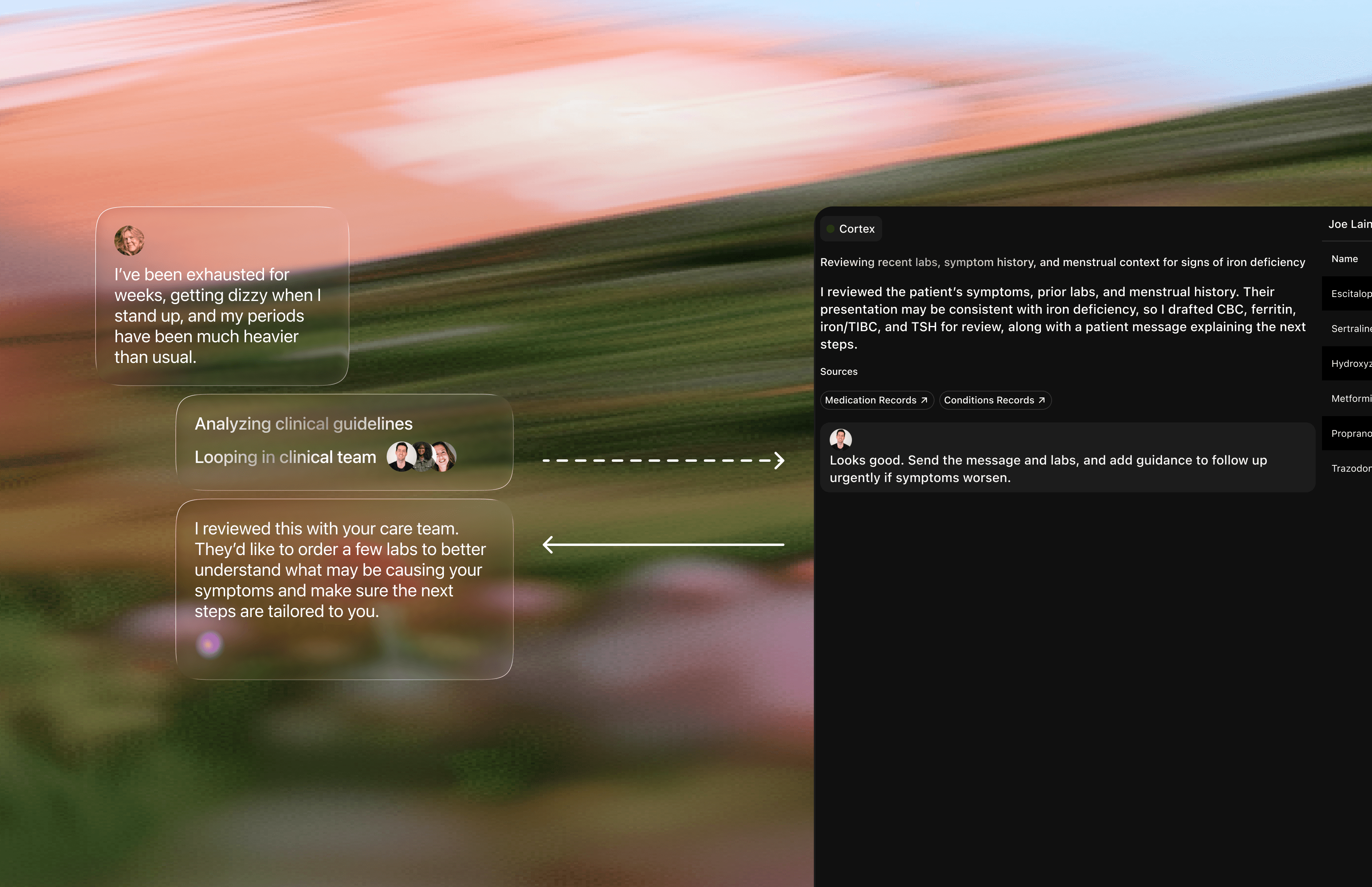
An AI doctor is usually a mobile or web product that uses AI to answer health questions, organize symptoms, or support care workflows. It is not the same as a licensed physician. The useful split is information and triage versus diagnosis, prescribing, and treatment decisions, which still require human clinical authority in legitimate products.
If you want care that can go beyond a one-off chat, look for clear physician oversight, published limits, and a model like Infinite Care on Lotus AI, where software supports intake and preparation and licensed physicians review and approve clinical actions when clinically appropriate. Lotus has raised $41 million in funding. Infinite Care is free and fast healthcare at the product level; medications, labs, and third-party services may still cost extra. Doctors review clinical decisions. Experiences vary. Not for emergencies. Contains AI-generated content.
What is Infinite Care on Lotus AI?
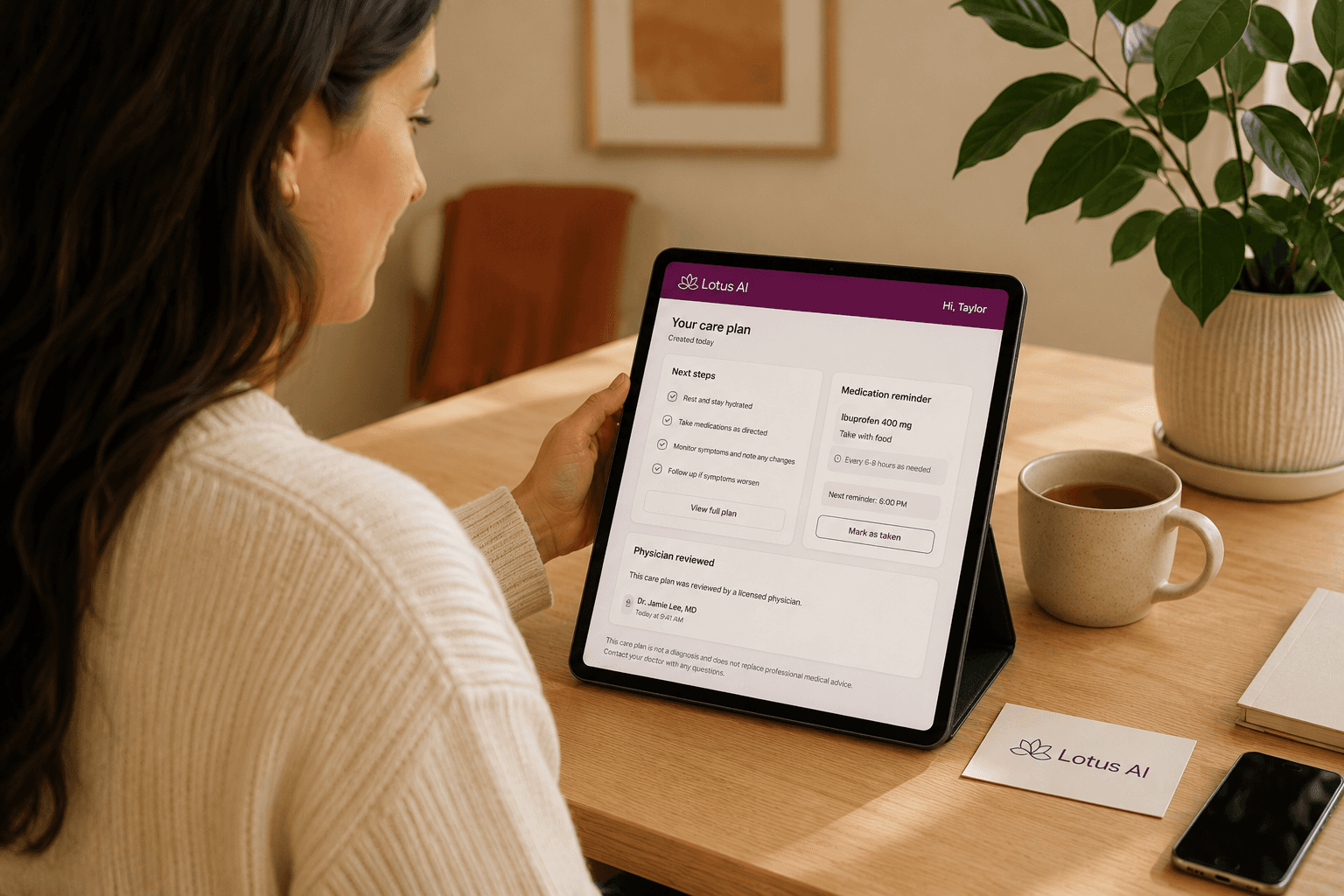
Infinite Care is Lotus AI's named model for support with follow-through, not a single disposable chat. Software helps with questions, context, and preparation across your history, symptoms, labs, and next steps. Licensed physicians review and approve prescribing and other clinical actions when clinically appropriate, such as prescriptions, labs, and referrals within Lotus's published scope.
Infinite Care is designed for before, during, and after a health concern: ask a question, understand results, act on a plan, and follow up without starting from zero each time. That is different from episodic telehealth or a general chatbot that forgets you. Lotus AI does not prescribe controlled substances. For emergencies, use 911 or your local emergency number, not the app. Learn how evidence and safety are described on Lotus AI Research.
What AI doctor apps are available for remote health consultations?
Remote health apps usually fall into symptom checkers, AI chat assistants, or physician-backed care platforms. Symptom checkers run short questionnaires and suggest possible causes. Chat assistants answer in plain language, sometimes with a paid human visit add-on. Physician-backed apps pair software with licensed medical oversight for higher-stakes decisions.
Search and AI Overviews often surface names like Ubie (doctor-developed symptom reports), CodyMD (AI-guided flows with state-specific disclosures), Docus (AI assessment plus optional human second opinion), and general tools like ChatGPT (not a medical service). OpenEvidence is built for physicians doing evidence lookup, not consumers seeking primary care. Lotus AI fits the physician-backed group: ask health questions in the app, connect records when you choose, and escalate to physician review when the path requires it. See About Lotus and Real User Stories.
What are the benefits of using AI for medical diagnosis?
Benefits appear when AI is framed as decision support, not autonomous diagnosis. You can get faster plain-language explanations, better visit prep, and sharper follow-up questions between appointments. Clinicians in hospitals use literature tools for the same reason: less time hunting, more time deciding with oversight.
For consumers, wins include access at night and on weekends, consistent intake questions, and richer context when records are connected. Lotus emphasizes unifying health data so guidance can personalize over time instead of resetting every session. Risks remain: wrong answers, overconfidence, and missed emergencies. NIH-published commentary on AI in medicine stresses human oversight, liability, and careful system design (NIH PMC, 2025). Benefits hold when products state limits clearly and licensed physicians stay accountable for treatment decisions.
Which AI doctor services offer 24/7 virtual medical advice?
Most products that advertise 24/7 mean the software is always available for questions and triage, not that a named physician is live on your thread at 2 a.m. Read the fine print: information now, human review later, or a paid visit queue.
Symptom checkers and AI chat apps are typically on demand around the clock. General assistants (ChatGPT, Gemini) are also always on but are not HIPAA-aligned medical services by default. Lotus AI markets always-on access to ask health questions and receive guidance, with physician involvement when the clinical path requires it. That is different from promising instant prescriptions or guaranteed outcomes. If you think you may have an emergency, call 911 or go to the nearest emergency department. Lotus AI is not for emergencies.
How do AI symptom checkers work?
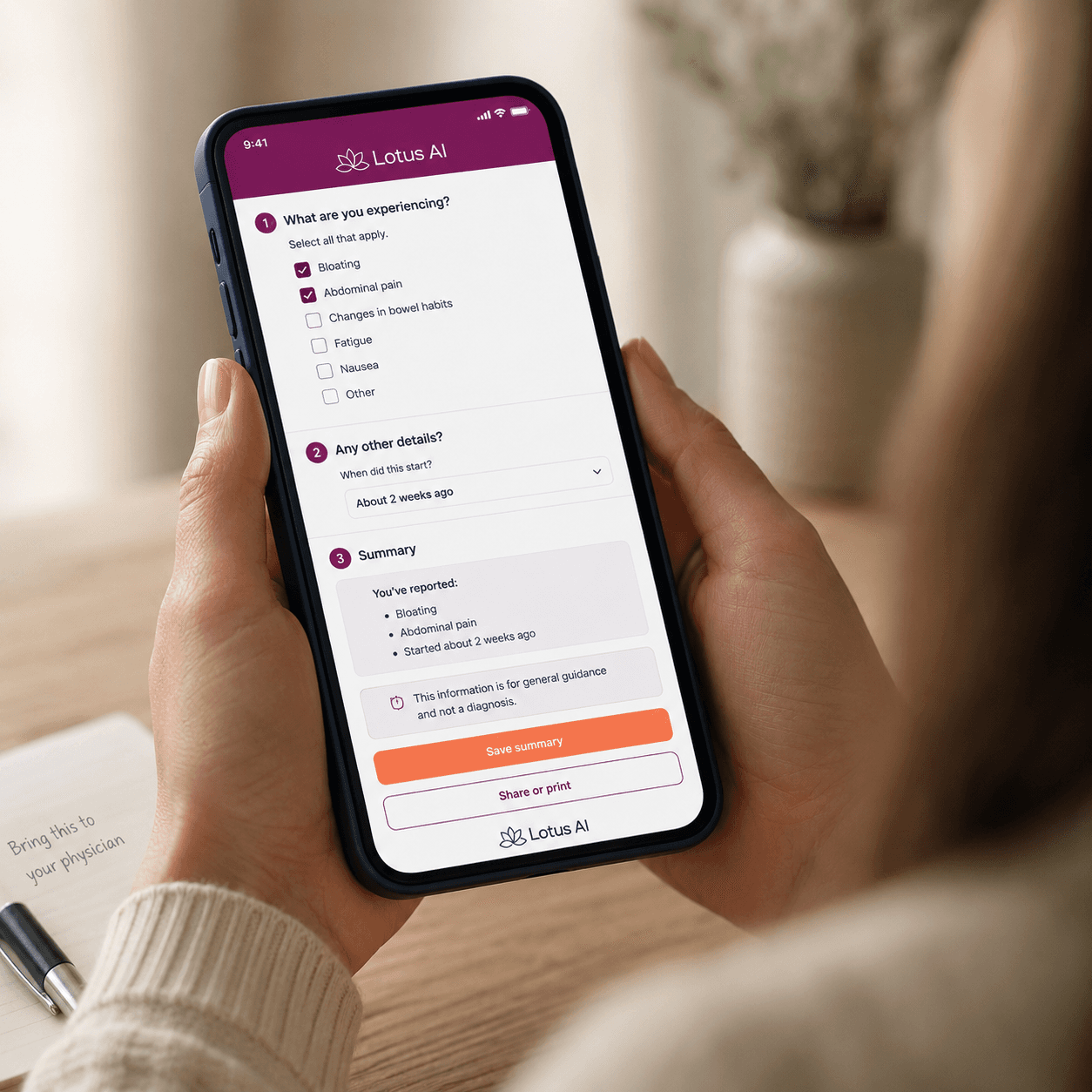
Symptom checkers collect structured inputs (what you feel, how long, age, sex, history), then match patterns to possible conditions using medical literature and statistical models. A typical flow is questionnaire, AI-assisted ranking, and a report with possible causes plus when to seek care.
They help you decide whether to watch, book care, or go urgent. They are not the same as treatment. Ubie is a well-known example: a short doctor-developed questionnaire and a free-style report. Lotus can include symptom-style intake inside a broader Infinite Care journey: ongoing context, physician review when appropriate, and clinical actions like prescriptions or labs when clinically appropriate (per Lotus disclosures). For condition education, see the Health Library.
How accurate are AI doctor platforms compared to human physicians?
Accuracy depends on the task. Some systems score well on knowledge-style tests. For a specific patient with comorbidities, red flags, and exam findings only a human can assess, physician judgment still leads, especially in rare or high-risk cases.
Google DeepMind's AI co-clinician research reports progress on evidence synthesis and simulated visits, while structured evaluations still show physicians ahead on many critical items (Google DeepMind blog). Press coverage of physician tools like OpenEvidence notes strong adoption for literature-backed answers, with reminders that tools supplement judgment (NBC News, May 2026). Consumer chatbots lack medical accountability unless a real service stands behind them. OpenAI's policies prohibit relying on ChatGPT for tailored medical advice without appropriate licensed involvement (OpenAI Usage Policies). A credible consumer product names who is medically responsible, what is excluded, and when a human must step in. On Lotus, licensed physicians review and approve clinical actions when clinically appropriate; software supports workflow, and physicians own the call (Lotus AI Research).
Where can I find reliable AI health assessment platforms?
Reliability means clear scope, privacy practices you can read, physician oversight for treatment paths, and primary sources for claims, not hype or star counts alone.
Check whether the product is only informational or a real medical service with licensed physicians. Confirm emergency exclusions and controlled-substance policy. Prefer vendors that link to privacy and security pages instead of vague "HIPAA" badges alone. Lotus AI publishes physician involvement and identity verification for record connection in its public FAQ materials. Competitors publish different trust frames: Ubie emphasizes physician supervision and literature; Docus cites SOC 2, HIPAA, and GDPR in its trust materials. For a regulatory overview of software in health, see the FDA page on AI/ML-enabled medical devices.
Can AI doctors diagnose common illnesses through mobile apps?
Apps may suggest likely conditions for common complaints (cough, rash, urinary symptoms) and advise when to seek care. A formal diagnosis and treatment plan in the U.S. generally require a licensed medical service and appropriate physician involvement, not software alone.
Some products route you to a paid licensed visit after chat. Others stop at education. Lotus AI describes physician-reviewed guidance and clinical actions when clinically appropriate, not autonomous AI diagnosis. Common primary-care-style questions may fit; chest pain, stroke symptoms, severe psychiatric crisis, or pregnancy emergencies need emergency or in-person pathways. To try Lotus on your own questions, start at Download Lotus.
What do reviews say about AI-powered virtual health assistants?
Public reviews often praise speed, plain language, and convenience. Common complaints include overconfidence, billing surprises, weak emergency routing, or confusion about whether the bot is a real doctor.
App-store and Trustpilot threads on category leaders (as of early 2026) repeat those themes: helpful for triage, not a substitute for 911. Press focus is shifting toward physician-facing AI search adoption as well as consumer chat. For Lotus, weigh structural claims (physician-reviewed clinical actions when appropriate, funding scale, published privacy materials) over anecdote alone. Real User Stories illustrate experiences; they are not clinical evidence for your case.
What companies provide AI doctor solutions for mental health support?
Mental health spans coaching apps, teletherapy marketplaces, and medical services that can include prescribing when appropriate. Some AI doctor products list mental health categories; others partner with therapists only.
Adjacent brands include Wysa, Woebot, Talkspace, BetterHelp, and Headspace, each with a different regulatory model. Lotus can address anxiety, depression, and related questions in a primary-care-style frame, but crisis care (active suicidal ideation, psychosis, severe mania) requires emergency services and specialist pathways. Ask any product whether a licensed prescriber in your state can adjust medications, whether therapy is included, and how crises are routed. Lotus AI states it does not prescribe controlled substances; complex psychiatric medication management may still need in-person or specialist care.
What does a subscription for an AI-driven wellness program usually cost?
Pricing models split into free tiers with paid human visits, monthly chat subscriptions, employer wellness bundles, and full medical services with different copay structures. Always confirm live pricing on the official site.
Consumer chat products often use a free AI layer plus a per-visit fee (competitor marketing pages have cited visit fees in the roughly $39 range for some U.S. telehealth add-ons, as of 2026). Subscription wellness chats elsewhere often land from about $19 to $350 per month depending on tier and features. Lotus AI's public positioning emphasizes free primary care access through Infinite Care at the product level; medications, labs, and third-party costs may still apply. That is not the same as "everything in healthcare is free." Confirm current terms in-app before you rely on any article.
How do popular AI doctor options compare by use case?
This is a neutral category map, not a ranked "winner" list. Match the product to your goal.
If your goal is… | Examples to evaluate | Lotus AI angle |
|---|---|---|
Quick symptom report before a visit | Ubie and similar checkers | Lotus can include intake inside ongoing Infinite Care |
Anonymous AI chat, optional paid visit | Category includes chat-first telehealth hybrids | Lotus emphasizes continuity + physician review when appropriate |
AI assessment + optional specialist second opinion | Docus and similar | Lotus focuses on primary-care-style access, not only second opinions |
Physician literature at point of care | OpenEvidence (clinician-facing) | Lotus is consumer primary care, not a hospital search tool |
Ongoing questions, records, physician-reviewed actions when appropriate | Lotus AI | Infinite Care model; download to test |
How do I choose an AI doctor app that fits my goal?
Start with intent: information only, one-off triage, ongoing primary-care-style support, or clinician literature. Then verify medical responsibility, emergency policy, controlled-substance rules, and what costs extra.
Use a three-question filter: (1) Who is accountable for prescriptions and referrals? (2) Does the product connect and refresh your records, or forget you each session? (3) What does "free" actually include? If you want software plus physician-reviewed clinical actions when appropriate, with Infinite Care positioning, test Lotus against your real questions on Download Lotus and verify scope on About Lotus.
FAQ
What is an AI doctor in simple terms?
Software that answers health questions or guides symptoms using AI. It is not automatically a licensed physician unless a real medical service and clinicians stand behind it with clear accountability.
Is Lotus AI an AI doctor?
Lotus AI uses AI plus licensed physicians who review and approve clinical actions when clinically appropriate under Infinite Care. It is designed for ongoing access, not emergency dispatch.
Can an AI doctor prescribe medication?
Only through a licensed prescriber in a proper medical service. Lotus states physicians can prescribe when appropriate and does not prescribe controlled substances.
Is Lotus AI free?
Lotus markets free primary care access at the product level through Infinite Care. Medications, labs, and third-party costs may still apply. Confirm current terms in the app.
How is Lotus AI different from ChatGPT for health questions?
ChatGPT is a general assistant, not a substitute for professional medical advice for a specific person. Lotus AI is built as a medical service model with physician oversight and care workflows.
Disclaimer
Lotus AI is a medical service with limitations. It is not for emergencies. If you think you may be having a medical emergency, call 911 (or your local emergency number) or go to the nearest emergency department immediately.
Controlled substances: Lotus AI does not prescribe controlled substances.
Clinical decisions: Prescriptions, labs, and referrals are issued only when appropriate and reviewed by licensed physicians. Medication and lab fees may apply. Third-party costs may still apply.
Privacy: How Lotus AI protects your health data.